


Tired in a way that sleep doesn't fix.
Your nervous system remembers everything.
Trauma lives in the body. Healing can too.
Maybe there wasn't one single moment you can point to. No dramatic event, no obvious "reason." just a slow accumulation of moments that taught you the world wasn't quite safe. That you had to be small, or perfect, or invisible to be loved.
Maybe it was growing up in a home where things felt unpredictable. Where you learned to read the room before you learned to read people. Where love came with conditions, or didn't come at all.
Or maybe it shows up in your relationships now. A pattern you can't seem to break, walls you didn't mean to build, a fear of getting too close or being abandoned that you can't quite explain.
Trauma isn't always a single event.It can be years of small moments that added up. A childhood that asked too much of you. Relationships that slowly convinced you that you were too much, or not enough.
Whatever shape it took, it was real. What you're carrying is real. And you deserve support that actually gets that.
Healing is possible. Not just managing, actually healing. And you don't have to do it alone.

What is trauma?
Trauma isn't just what happened to you, it's what happened inside you as a result. As physician and trauma expert Gabor Maté puts it: "Trauma is not what happens to you, it's what happens inside you as a result of what happened to you."
It doesn't have to be a single catastrophic event. Trauma can come from years of emotional neglect, growing up in an unpredictable home, relationships that made you feel unsafe, or experiences that were never acknowledged or validated. Whatever the source, your nervous system felt it, and it adapted to protect you.

How trauma shows up…
Trauma rarely announces itself clearly. More often it shows up quietly, in ways that can feel confusing or even shameful:
A body that feels tense, tired, or disconnected, even when nothing is "wrong"
Thoughts or memories that surface without warning
Difficulty trusting people, even the ones who feel safe
Emotional reactions that feel bigger than the moment
Withdrawing from relationships or struggling to feel close to others
Sleep that never quite feels restful
A low hum of anxiety, sadness, or numbness that's just... always there
These aren't character flaws. They aren't signs that you're broken or weak. They are your nervous system's response to experiences it didn't have the support to fully process and they can change with the right help.
How therapy can help
Trauma therapy isn't about reliving what happened. It's about helping your nervous system finally feel safe enough to process it, so it stops showing up uninvited in your daily life.
In our work together, you'll have a space that is confidential, non-judgmental, and entirely yours. We go at your pace. We don't push you toward anything you're not ready for. And we draw from approaches that are specifically designed to reach trauma where it actually lives… in the body, in the nervous system, in the parts of you that learned to protect yourself long ago.

“Unprocessed memories not only can intensify our sensations and emotional responses, they can also prevent us from feeling.”
~ Francine Shapiro
EMDR — Eye Movement Desensitization and Reprocessing
EMDR is one of the most well-researched trauma treatments available. Rather than talking through what happened in detail, EMDR works by engaging both sides of your brain simultaneously, through guided eye movements, gentle tapping, or light vibrations. Allowing you to briefly revisit distressing memories. This bilateral stimulation helps your brain process and integrate those memories in a new way, so they lose their grip on your present life. Many clients find that EMDR creates meaningful shifts in less time than traditional talk therapy. Emily Needles LCPC and Olivia Sears LGPC utilize EMDR to assist in processing trauma. Our EMDR therapists are certified through EMDRIA, the governing body for EMDR practice.

Healing is not by rote or ritual, it’s by presence and attunement”
~ David Grand
Brainspotting
Brainspotting works on the principle that where you look affects how you feel. Using your natural eye position as a gateway, a trained Brainspotting therapist helps locate where trauma is held in the deeper, subcortical regions of the brain, the parts that control emotion, memory, and physical sensation. What makes Brainspotting unique is that you don't have to talk through what happened, or even revisit the event at all. Your nervous system does the processing, supported by an attuned therapist holding space alongside you. It's a powerful approach for people who feel stuck, or for whom talking hasn't been enough. Mina Reyes LCPC utilizes Brainspotting to process trauma somatically.

When you say, "A part of me feels that...," you have already embraced the basic idea of IFS whether or not you are aware of it.
~ Jon Schwartz and Bill Brennan
IFS — Internal Family Systems
IFS is rooted in the understanding that we all have multiple "parts" or inner voices, feelings, and patterns that developed to protect us, often in response to difficult experiences. The critical inner voice. The part that shuts down. The one that works constantly to stay in control. Through IFS, you'll learn to approach these parts with curiosity rather than judgment, and reconnect with your core Self, the calm, grounded center that was always there beneath the noise. For complex and relational trauma especially, IFS can be deeply transformative. Lacey Davis LCPAT LCPC utilizes IFS to actively work with protective parts and heal wounded inner parts holding trauma.

"Trauma is not what happens to us, but what we hold inside in the absence of an empathetic witness."
~ Peter Levine
Somatic Therapy — Healing Through the Body
Somatic therapy is rooted in the understanding that trauma doesn't just live in memories or thoughts, it lives in the body. In a chest that tightens without warning. Shoulders that never fully drop. A nervous system that stays on guard long after the danger has passed. Rather than talking through what happened, somatic work gently guides you to notice physical sensations as they arise, using the body itself as a doorway into healing. This approach is especially powerful for complex and relational trauma. The kind that accumulated slowly over time and lives in patterns of bracing, shrinking, or shutting down rather than a single memory you can point to. You don't need to have the words. Your body already knows and we'll follow its lead. Shayla LeBlanc, LCPC utilizes bilateral tapping, while Marsel Shamouelian LCSWC and Chaya Lencz LCSWC non-verbal techniques learned in the Ferentz Institute trainings.
Not sure which approach is right for you?
You don't need to figure that out before reaching out. That's our job. We'll get to know you first, and together we'll find the path that fits. Our trauma therapists serve clients in person in Towson and Bel Air, MD, and virtually throughout Maryland.
We know reaching out isn’t easy
"I'm not sure what happened to me counts as trauma."You don't need a diagnosis or a dramatic story to deserve support. If something happened that left a mark on how you see yourself, how you relate to others, or how safe you feel in your own body, that matters. Trauma isn't defined by the size of the event. It's defined by the impact it had on you. If you're here, something brought you to this page. That's enough.
"I'm afraid of making things worse by opening it all up."This is one of the most common fears we hear and one of the most important things to address. Trauma therapy, especially approaches like EMDR, Brainspotting, and somatic work, is specifically designed to go at your pace. You will never be pushed to revisit something before you're ready. Our job is to help you feel safe first and healing happens from that place of safety, not in spite of it.
"I've tried therapy before and it didn't help."We hear this more than you might think. Many trauma survivors have tried traditional talk therapy and walked away feeling like something was still missing because talking alone often can't reach where trauma lives. The approaches we use, EMDR, IFS, Brainspotting, somatic therapy are specifically designed to work with the nervous system and the body, not just the thinking mind. If therapy hasn't worked before, it doesn't mean healing isn't possible. It may just mean you haven't found the right fit yet.
You've carried this long enough. Let us help.
Reaching out does not have to feel overwhelming. We invite you to schedule a free 15-minute phone consultation, no pressure, just a simple conversation. Finding the right therapist matters, and we want you to feel confident in that choice. Browse our therapist directory to find the warm, personal fit that feels right for you. Whenever you are ready, we are here.
Meet the Team
-

Marsel Shamouelian LCSWC (She/Her)
Adult Trauma Therapist
-

Emily Needles LCPC (She/Her)
EMDR Adult Trauma Therapist
-

Julia Kassman LCSWC (She/Her)
EMDR Adult Trauma Therapist
-

Mina Reyes LCPC (She/Her)
Brainspotting Adult Trauma Therapist
-
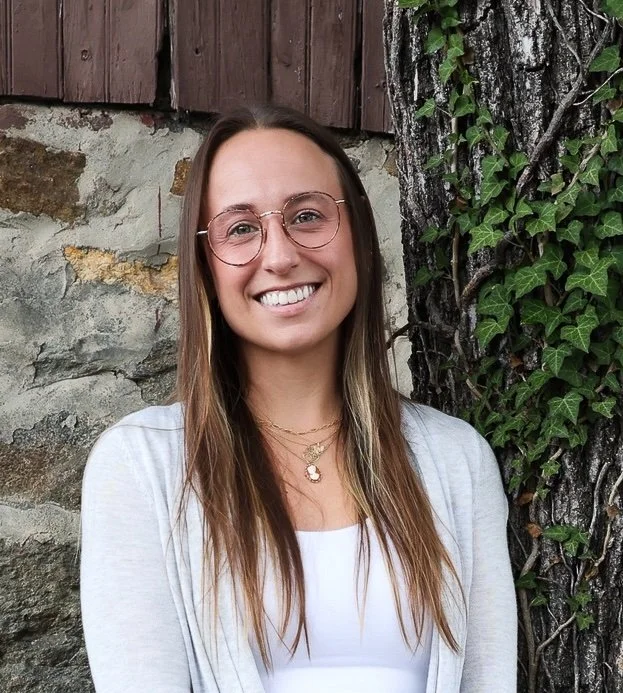
Lacey Davis LCPAT LCPC (She/Her)
Adult IFS Trauma Therapist
-

Shayla LeBlanc LCPC (She/Her)
Adult Trauma Therapist
-
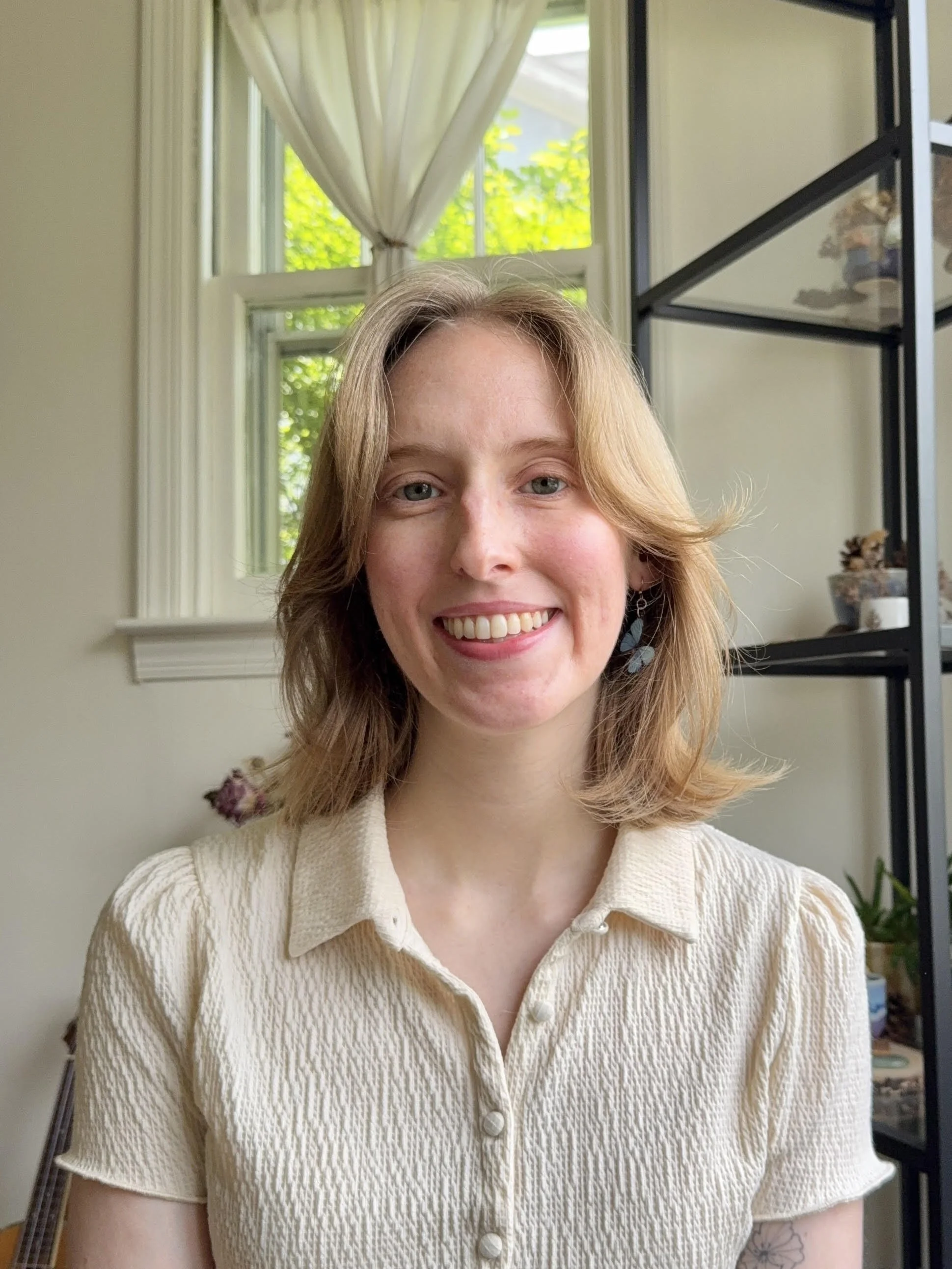
Olivia Sears LGPC (She/Her)
EMDR Adult Trauma Therapist
-

Chaya Lencz LCSWC (She/Her)
Adult Trauma Therapist

Peter Levine
“Trauma is a fact of life. It does not, however, have to be a life sentence.”
Bessel van der Kolk